Backend data entry
Promotion Manager
A new interface for entering rules, assigning scope, tracking readiness, and safely managing live offers.
→Rebuilding an End-to-End Promotions Platform
I designed a headless promotions platform that gives teams a structured way to create offers, computes the real value of each benefit, and sends one trustworthy price to six guest-facing brands.
Overview
The old product stored promotion rules as display copy. The new product turns those same rules into structured data, calculated value, and a guest-facing price.
Backend data entry
A new interface for entering rules, assigning scope, tracking readiness, and safely managing live offers.
→Computation service
A rules system for eligibility, benefit valuation, free-night selection, stacking, and guardrails.
→Six brand sites
A released experience that shows when an offer applies and carries the savings through every total.
Starting point
Promotion details lived in prose. Eligibility and realized savings could not be computed consistently.
My role
I led the UX architecture, admin interaction design, logic prototypes, guest experience, and acceptance criteria.
Released outcome
The first release carries the promotion from configuration through the inquiry total across six brands.
01 Promotion Manager
The new interface converts supplier and corporate offer language into structured, computation-ready inputs. It is the operational interface for the headless promotions platform.
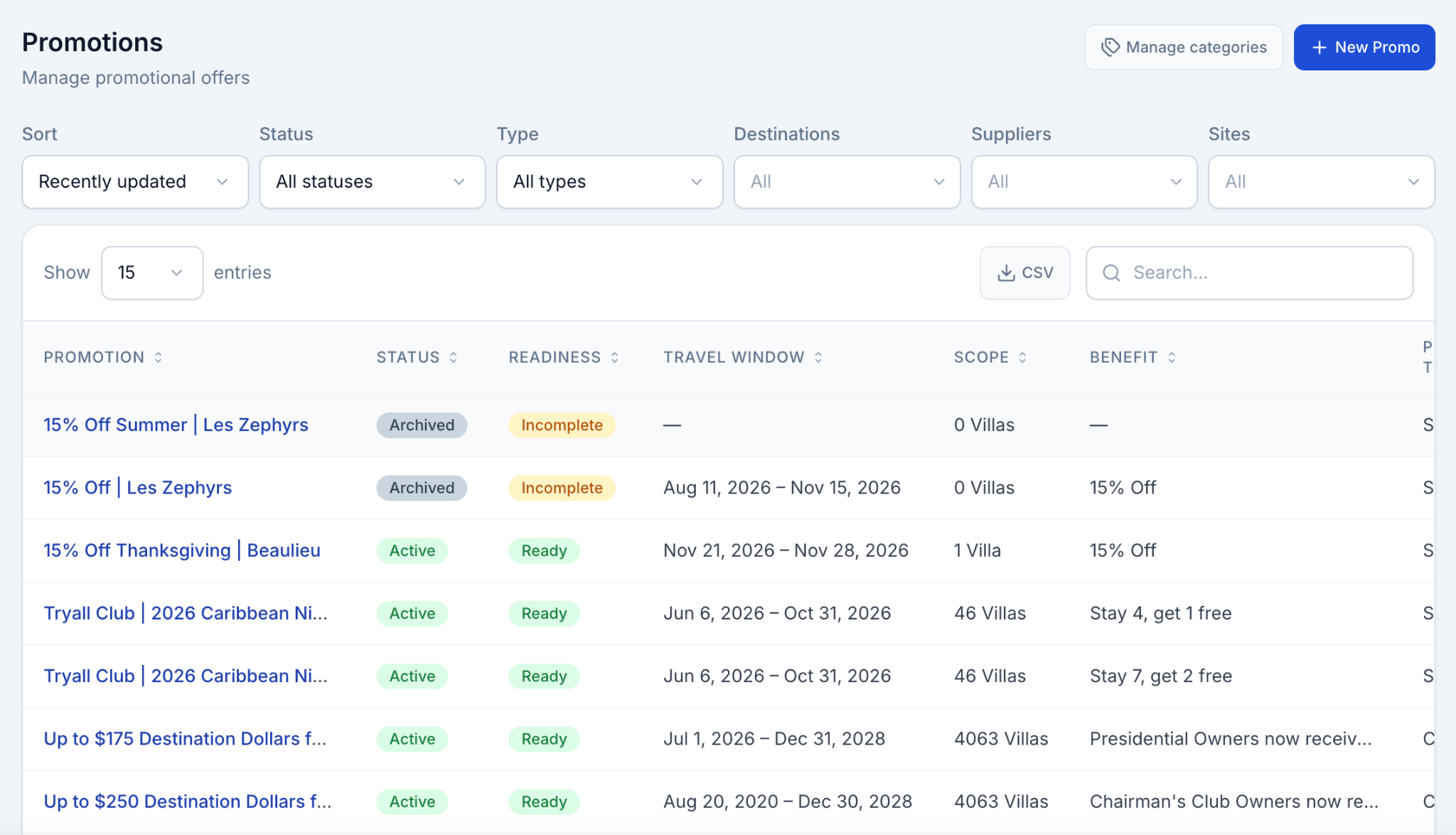
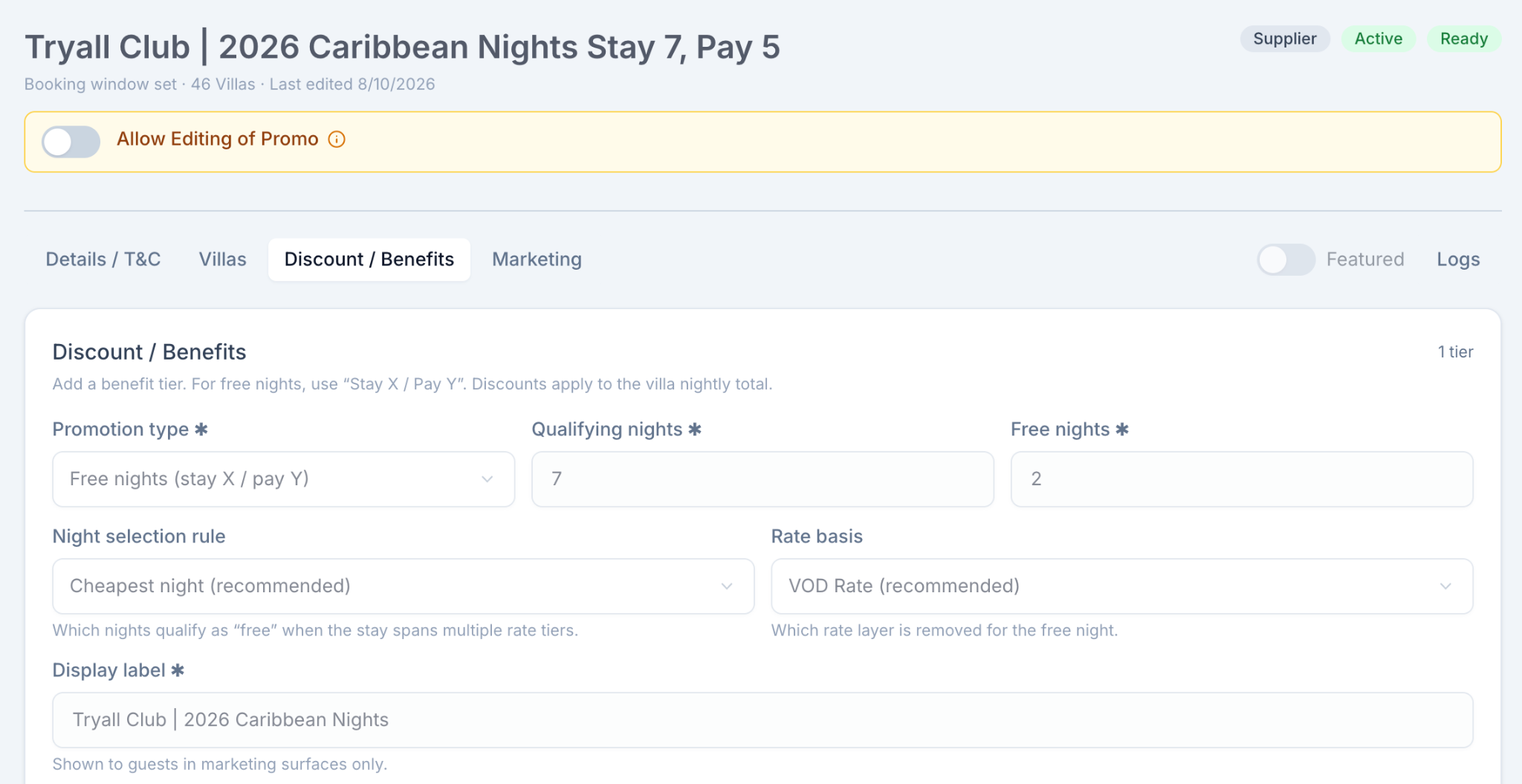
AI-assisted design method
I used Claude to rapidly create the initial HTML interface basis. I then refined the information architecture, hierarchy, field behavior, system states, safeguards, edge cases, and acceptance criteria with the team before development.
02 Computation Engine
The engine reads the structured admin data, determines whether a stay qualifies, selects the benefit, calculates its value, and returns one normalized result to every consumer.
Dates, scope, benefit, priority
10 ordered, named checks
Runs, selection, stacking
PHP and Go stay aligned
Exploration prototype
Used to test the rule before engineering committed to an implementation.
Each complete seven-night run earns the benefit.
A blackout or out-of-window night breaks the run. Benefits are awarded within each valid run.
Cheapest, first, or last night determines the actual dollar value, with earliest date breaking ties.
Promotion type controls stacking. Savings above 30% create a warning without blocking the quote.
03 Guest Experience
The release distinguishes an available offer from an applied benefit, shows the realized savings inside pricing, and keeps the same post-promotion total through inquiry.
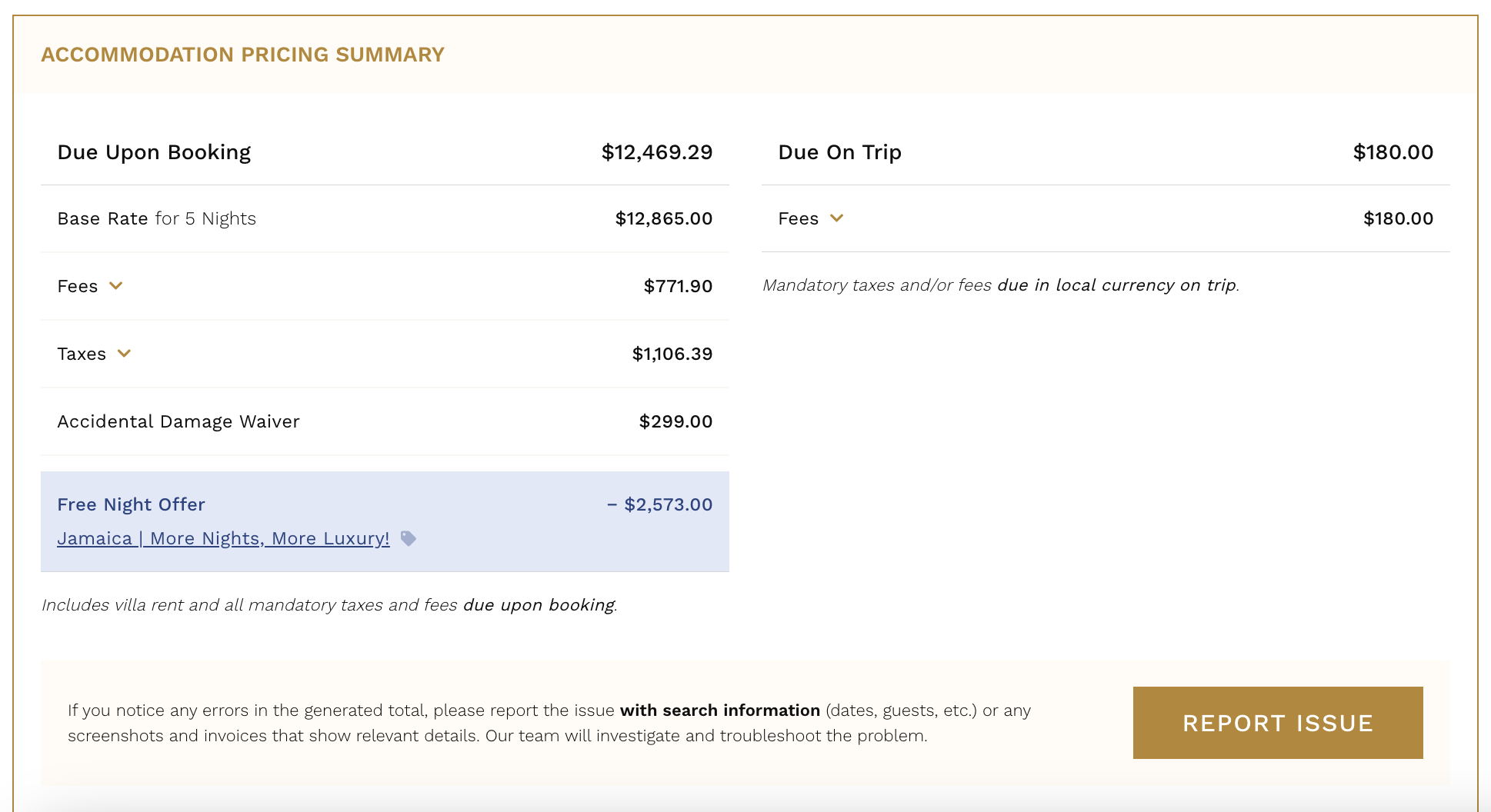

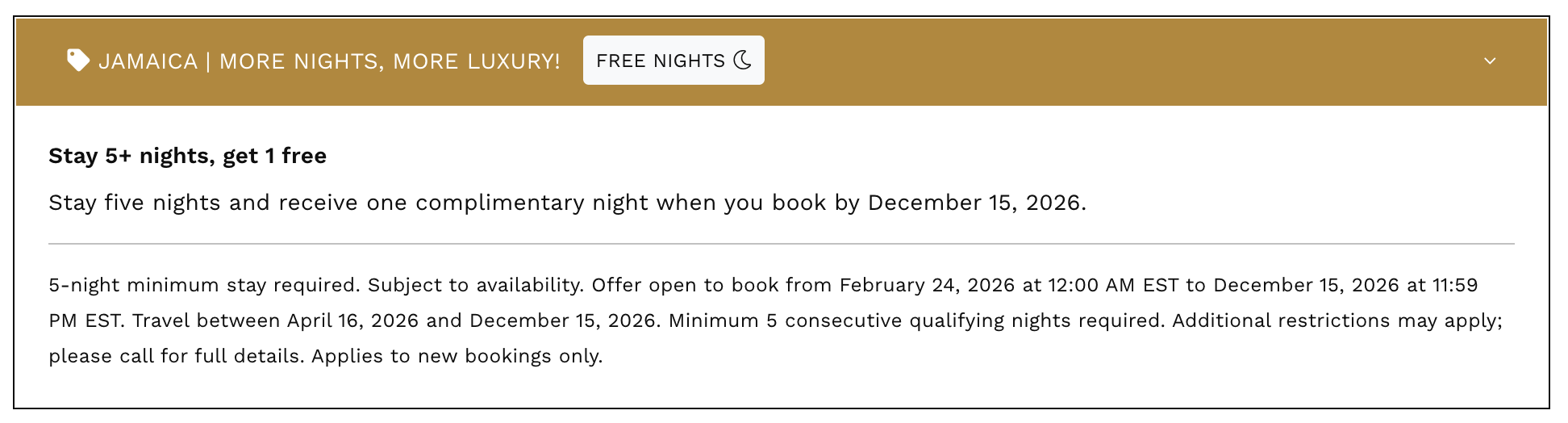
01Available is not appliedThe interface communicates whether an offer exists or has actually changed the price.
02One post-promo totalVilla pricing, booking amount, inquiry subtotal, and grand total all agree.
03Progressive disclosureFees and taxes stay scannable while full itemization remains one click away.
AI Throughout the project
AI was embedded across discovery, interface prototyping, logic testing, and specification review. Each output was treated as material to verify, critique, and improve.
Discovery
Interface design
Logic design
Quality
Human-owned decisions
AI did not choose valuation policy, stacking rules, readiness requirements, the 30% guardrail, release scope, or accepted limitations. I made those product calls with stakeholders and verified the evidence behind them.
Outcome
The July 2026 launch connected operations, pricing logic, and guest communication through one promotion model across six brands.
What I brought to the team
I moved between operational workflows, computation rules, front-end communication, and engineering criteria without losing the user's mental model.